
How to Choose RFID Frequency Bands? Complete Comparison of LF / HF / UHF / 2.4GHz
In RFID system design, frequency band selection is often more critical than hardware brands or individual component specifications. Different RFID frequency bands directly affect reading distance, interference resistance, environmental adaptability, and system scalability. Incorrect frequency selection may result in costly redesigns or complete system replacement.
Why Does RFID Frequency Selection Affect System Success?
Different RFID frequency bands directly influence the following key factors:
- Reading distance and stability
- Resistance to interference
- Compatibility with metal and liquid environments
- Multi-tag simultaneous reading efficiency
- Regulatory compliance and global deployment flexibility
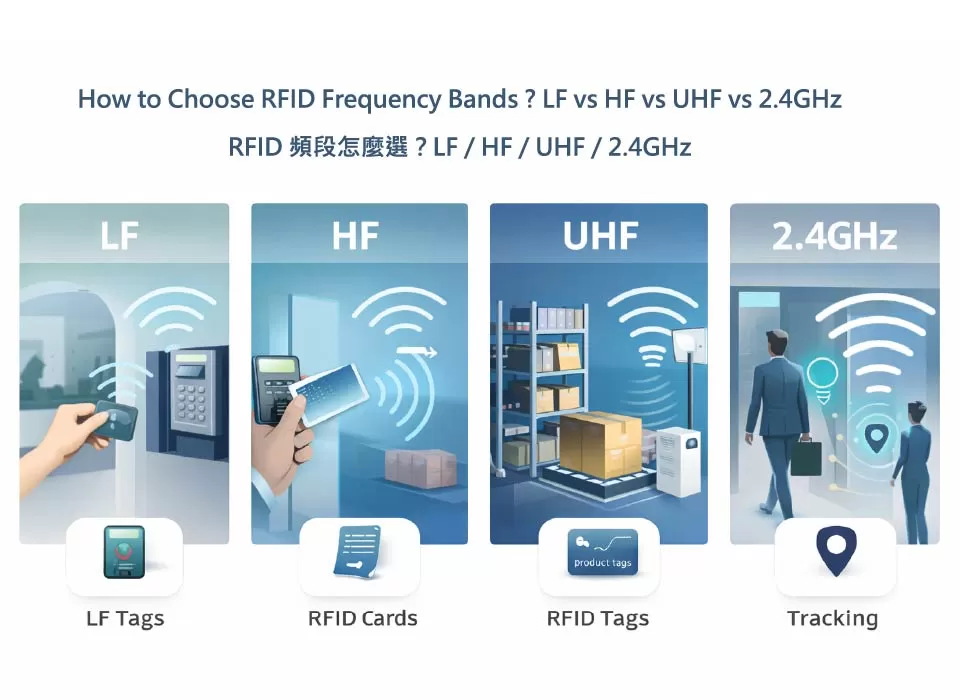
Overview of Common RFID Frequency Bands
Four Major RFID Frequency Bands
| Band | Common Name | Typical Reading Distance | Key Characteristics |
|---|---|---|---|
| LF | 125 kHz | 2–10 cm | Stable, strong interference resistance |
| HF | 13.56 MHz (including NFC) | 5–30 cm | Highly standardized, mature applications |
| UHF | 860–960 MHz | 1–10 m | Long range, multi-tag reading |
| 2.4GHz | Active RFID | Over 10 m | Active transmission, real-time tracking |
LF (125 kHz) RFID: High Stability for Short-Range Applications
Technical Characteristics of LF RFID
- Minimal sensitivity to metal and liquid interference
- Stable reading performance with low error rates
- Relatively simple antenna design
Limitations include short reading distance and low data transmission rate, making LF unsuitable for high-volume simultaneous tag reading.
Typical LF RFID Applications
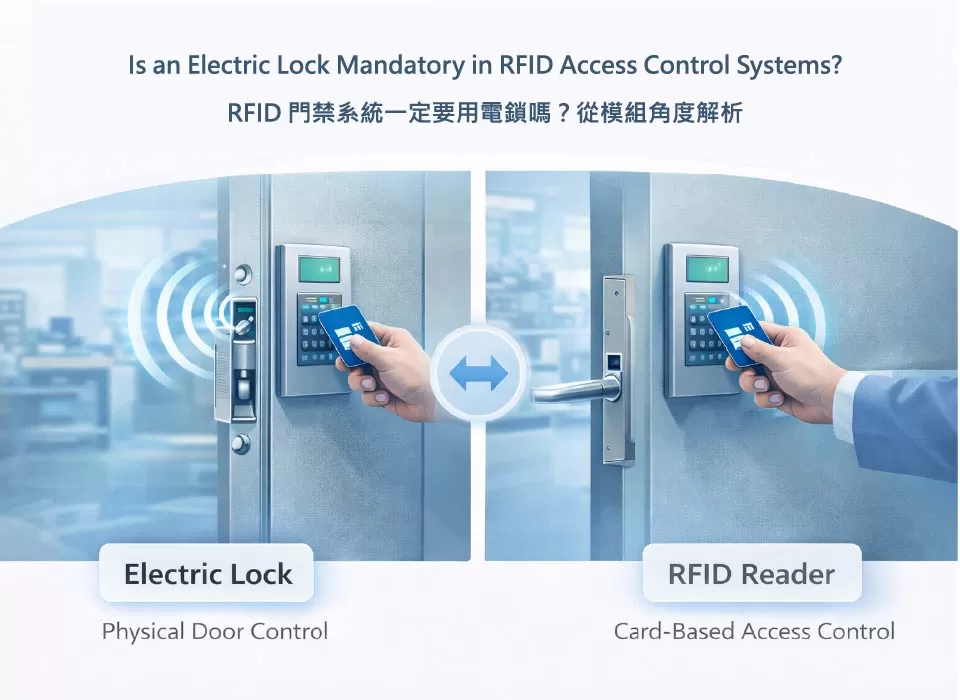
- Access control systems
- Industrial equipment authorization
- Identity verification and poka-yoke applications
HF (13.56 MHz) RFID: Mature Standards and Broad Adoption
Key Advantages of HF RFID
- Comprehensive international standards (ISO 14443 / ISO 15693)
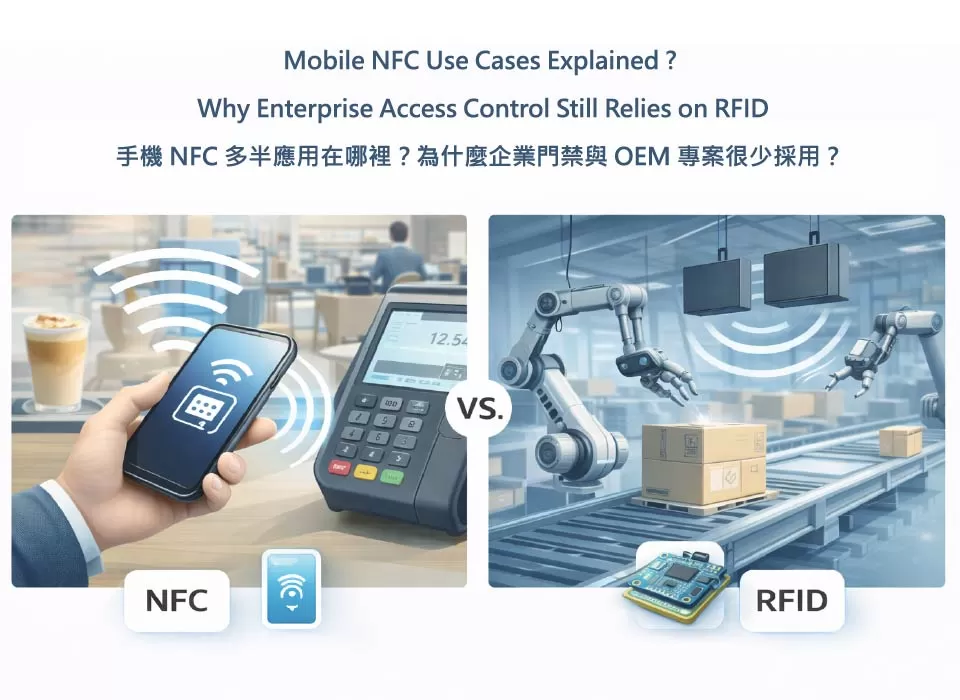
- High compatibility with NFC technology
- Stable performance with controllable cost
Common HF RFID Applications
- Access control and attendance systems
- Smart cards and NFC-based applications
- Healthcare and library management
UHF RFID: The Key Choice for Long-Range and High-Efficiency Applications
Technical Advantages of UHF RFID
- Reading distances of several meters or more
- High-speed, multi-tag simultaneous reading
- Well suited for automation and logistics environments
Limitations and Design Considerations of UHF RFID
- Susceptible to metal and liquid interference
- High requirements for antenna and site design
- Regulatory differences across regions
Typical UHF RFID Applications
- Logistics and warehouse management
- Manufacturing line tracking
- Asset inventory and management
2.4GHz RFID: Active Real-Time Location Solutions
Characteristics of 2.4GHz RFID
2.4GHz RFID systems are typically classified as Active RFID, featuring active signal transmission, extended reading distances, and real-time location capabilities. These systems involve higher costs and require battery-powered tags.
Typical Application Scenarios
- Real-time tracking of personnel and vehicles
- High-value asset monitoring
- Smart factories and large-scale facilities
How to Choose the Right RFID Frequency Band
Key Evaluation Factors
- Required reading distance
- Environmental conditions (metal and liquid presence)
- Need for simultaneous multi-tag reading
- System integration and long-term supply stability
- Cost and maintenance considerations
There is no single “best” RFID frequency band— only the most suitable choice for a specific application.
Conclusion: Frequency Selection Is the Foundation of RFID System Success
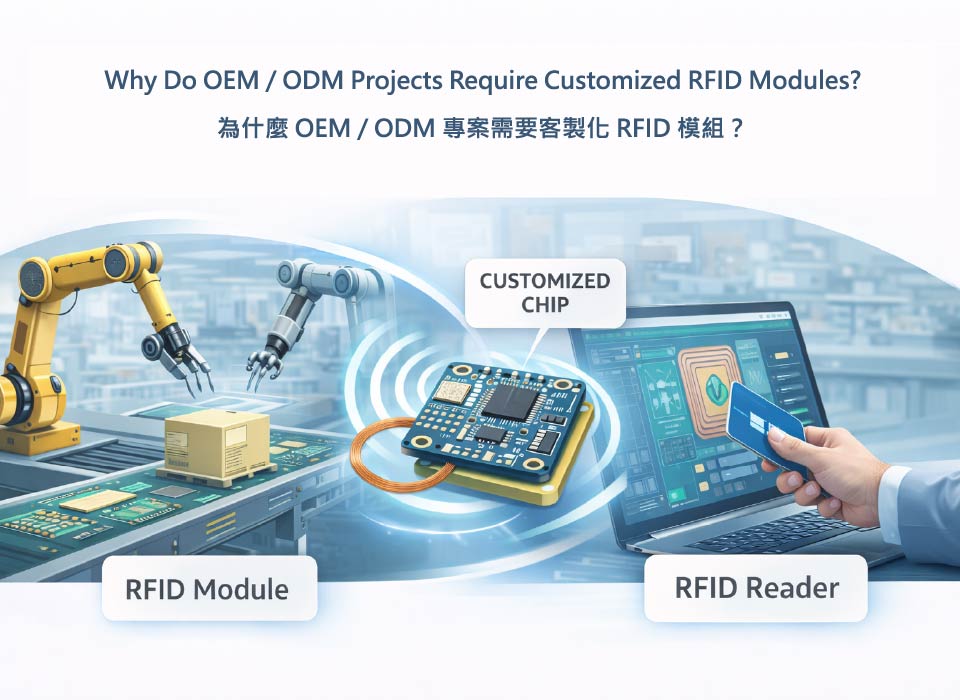
RFID frequency selection defines system performance limits and long-term operational stability. For OEM / ODM and long-term deployment projects, frequency planning should take priority over individual hardware selection and be aligned with overall system architecture.
Actual system planning should be evaluated based on project environment, application requirements, regulatory constraints, and system architecture. This article provides general technical decision logic and selection references for RFID frequency planning.