
RFID Frequency Band Selection Guide: Comprehensive LF, HF, UHF & 2.4GHz Comparison
In enterprise-grade RFID system architecture, frequency band selection serves as the foundational parameter that governs overall deployment success—far outweighing individual hardware brand preferences. Different RFID frequencies dictate critical operational limits, including signal interrogation range, electromagnetic interference (EMI) immunity, environmental resilience, and network scalability. Deploying an sub-optimal frequency band can result in catastrophic signal bottlenecks, prohibitive retrofitting overhead, or total hardware non-compliance.
Why Does RFID Frequency Selection Dictate System Viability?
Selecting the precise operational frequency directly determines the technical thresholds of your deployment, specifically affecting:
- Interrogation Range & Link Stability: The maximum reliable distance for continuous data capture without packet loss.
- Electromagnetic Interference (EMI) Immunity: The hardware's capacity to maintain signal integrity amidst ambient industrial noise.
- Substrate Adaptability: RF performance and signal attenuation when deployed on or around metallic surfaces and liquid substrates.
- Bulk Tag Interrogation & Anti-Collision: The hardware's throughput efficiency when decoding multiple transponders simultaneously.
- Global Spectrum Compliance: Adherence to international radio frequency regulations (FCC, CE, etc.) for seamless cross-border deployment.
Overview of Enterprise RFID Frequency Spectrum Allocations
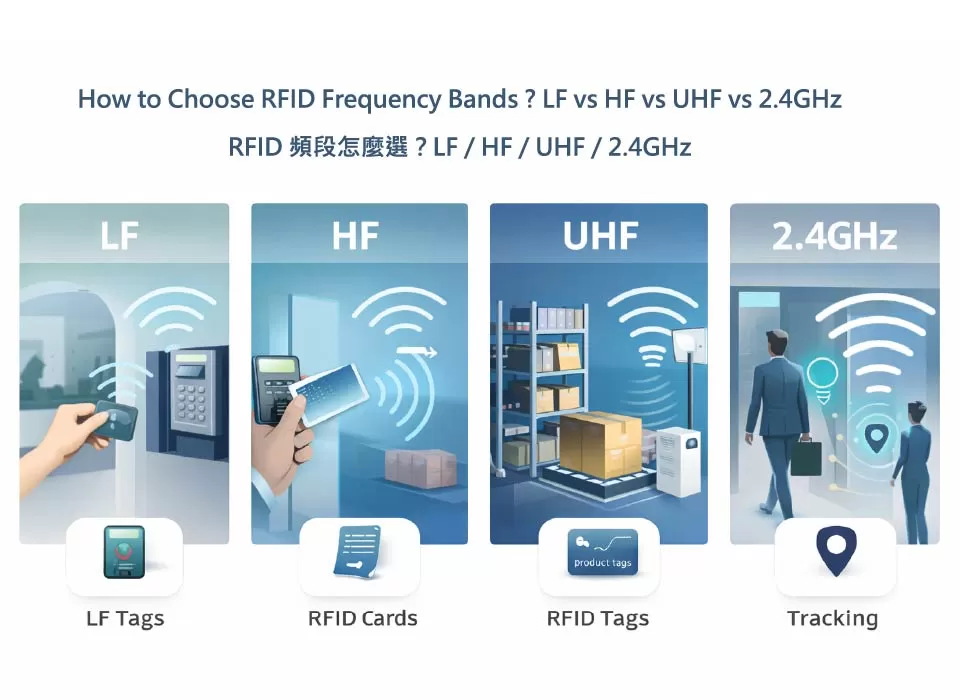
The Four Core RFID Frequency Cohorts
| Frequency Band | Standard Operating Spectrum | Typical Interrogation Range | Core Architectural Profile |
|---|---|---|---|
| LF (Low Frequency) | 125 kHz | 2–10 cm | Near-field coupling; exceptional immunity to liquid/metal attenuation. |
| HF (High Frequency) | 13.56 MHz (Includes NFC) | 5–30 cm | Globally standardized framework; mature ecosystem; highly secure proximity tracking. |
| UHF (Ultra-High Frequency) | 860–960 MHz (Global Range) | 1–10 m | Far-field propagation; high-throughput anti-collision; bulk tag processing. |
| 2.4GHz (Microwave) | Active RFID / Real-Time Tracking | Exceeding 10 m | Battery-powered active transmission; continuous long-range positioning. |
LF (125 kHz) RFID: High-Stability Near-Field Credentialing
Technical Hardware Characteristics of LF Architectures
- Negligible Substrate Attenuation: Unmatched signal penetration through dense carbon-based compounds, liquids, and proximity metals.
- Deterministic Data Capture: Highly localized read fields ensure zero accidental reads from adjacent credentials.
- Simplified Antenna Tuning: Inductive magnetic coupling minimizes environmental detuning effects.
Architectural Constraints: Highly localized interrogation range and limited data transmission rates render LF hardware unsuitable for high-density, dynamic asset scanning workflows.
Primary B2B LF Deployments
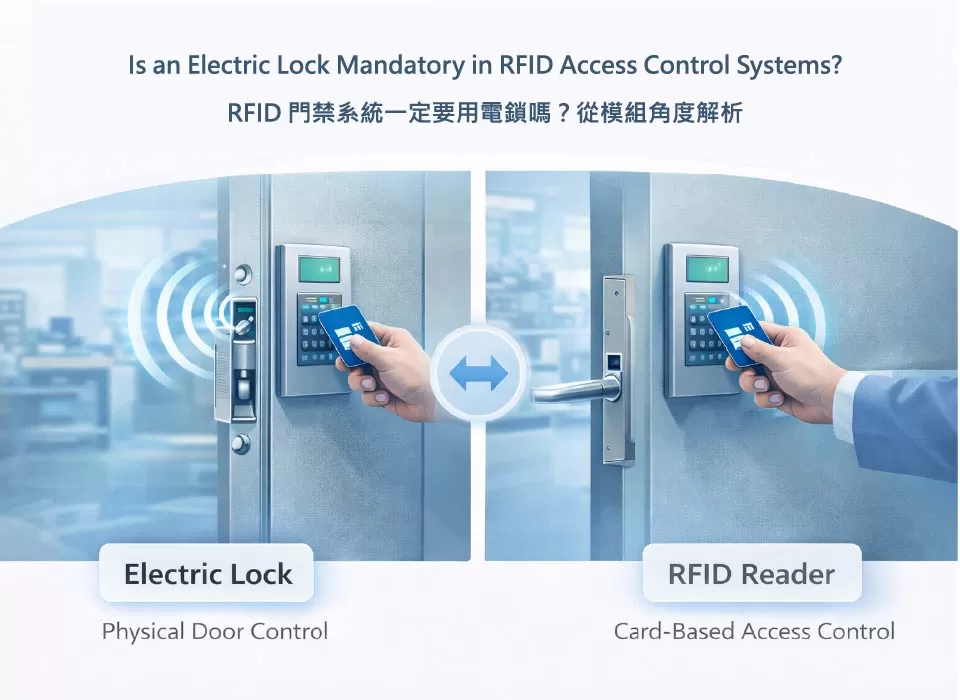
- Physical Access Control Systems (PACS) and secure perimeter entry.
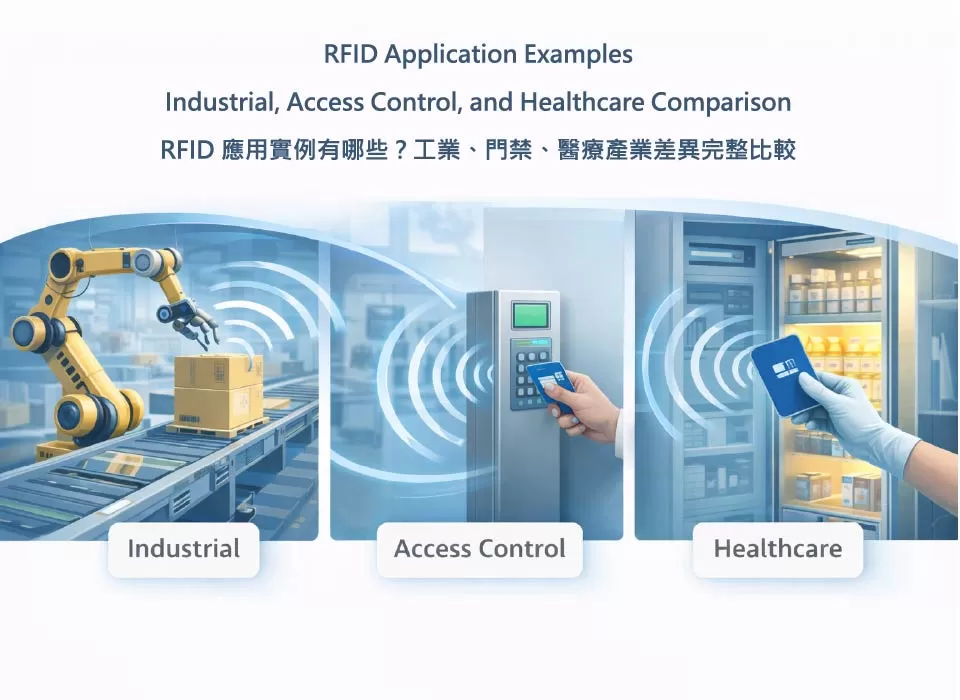
- Industrial machinery operator authorization and heavy equipment interlocks.
- Manufacturing line tool validation and error-proofing (Poka-Yoke) workflows.
HF (13.56 MHz) RFID: Globally Standardized Proximity Infrastructure
Strategic Benefits of HF Deployment
- Universal Standards Compliance: Native execution of international protocols including ISO 14443 Type A/B and ISO 15693.
- NFC Ecosystem Interoperability: Seamlessly interfaces with commercial smartphones and smart-wallet infrastructure.
- Balanced Cost-to-Security Ratio: Cost-effective transponders paired with advanced data encryption capabilities.
Standard HF Hardware Applications
- Corporate enterprise access control, smart card ticketing, and multi-tenant facility management.
- Closed-loop cashless payment terminals and loyalty card architectures.
- Healthcare patient validation, specimen tracking, and smart library automated check-out.
UHF RFID: Far-Field High-Throughput Asset Intelligence
Technical Advantages of UHF Hardware
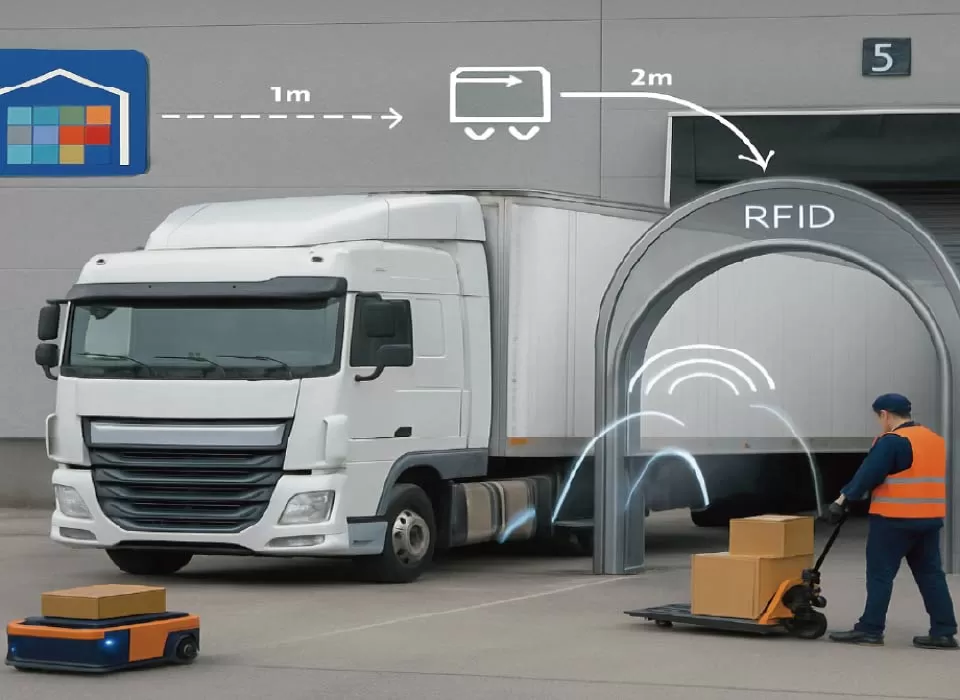
- Extended Interrogation Boundaries: Far-field propagation permits automated tracking across several meters without direct line-of-sight.
- Advanced Anti-Collision Protocols: Captures and decodes hundreds of unique tag IDs concurrently in high-velocity transit environments.
- Optimized for Supply Chain Automation: Drastically reduces manual scanning overhead across vast logistics networks.
Design Variables & Substrate Limitations
- Highly susceptible to RF absorption by liquids and signal reflection/detuning on unshielded metallic surfaces (requires specialized on-metal tags).
- Demands precise antenna polarization, power tuning, and onsite RF environmental site surveys.
- Requires hardware regionalization to comply with varying local spectrum regulations (e.g., US FCC vs. Europe ETSI).
Typical Enterprise UHF Applications
- High-volume logistics, cross-docking distribution, and warehouse inventory automation.
- Automated manufacturing assembly tracking and Work-in-Progress (WIP) visibility.
- Enterprise asset lifecycle management and real-time fleet yard tracking.
2.4GHz RFID: Active RTLS for Long-Range Telemetry
Architectural Profile of Microwave Active RFID
Operating in the 2.4GHz ISM band, these setups function primarily as Active Real-Time Location Systems (RTLS). Powered by onboard batteries, transponders proactively transmit high-frequency beacons across vast distances. While delivering unparalleled localization precision over wide zones, system architects must account for higher hardware unit costs and long-term tag battery lifecycle maintenance.
Target B2B Application Scenarios
- Real-Time Location Systems (RTLS) for personnel safety tracking in heavy industrial job sites.
- High-value mobile asset tracking across maritime ports and container terminals.
- Intelligent digital yard management and secure vehicle fleet access routing.
Engineering Evaluation Matrix: Selecting Your RFID Hardware Core
Critical Procurement Benchmarks
- Target Operational Range: Proximity proximity (cm) vs. wide-area far-field (meters).
- Material Composition of Target Environment: High liquid/metal interference profiles demand LF or specialized shielded HF/UHF transponders.
- Data Throughput Speed: Singular point-of-sale verification vs. concurrent bulk inventory capture.
- Integration Complexity & Supply Security: Choosing field-proven controllers that guarantee long-term firmware support and backward compatibility.
In industrial security engineering, there is no absolute "superior" frequency band only the optimal hardware configuration mathematically aligned to the environmental constraints of the project.
Conclusion: Precision Frequency Engineering Secures System Longevity
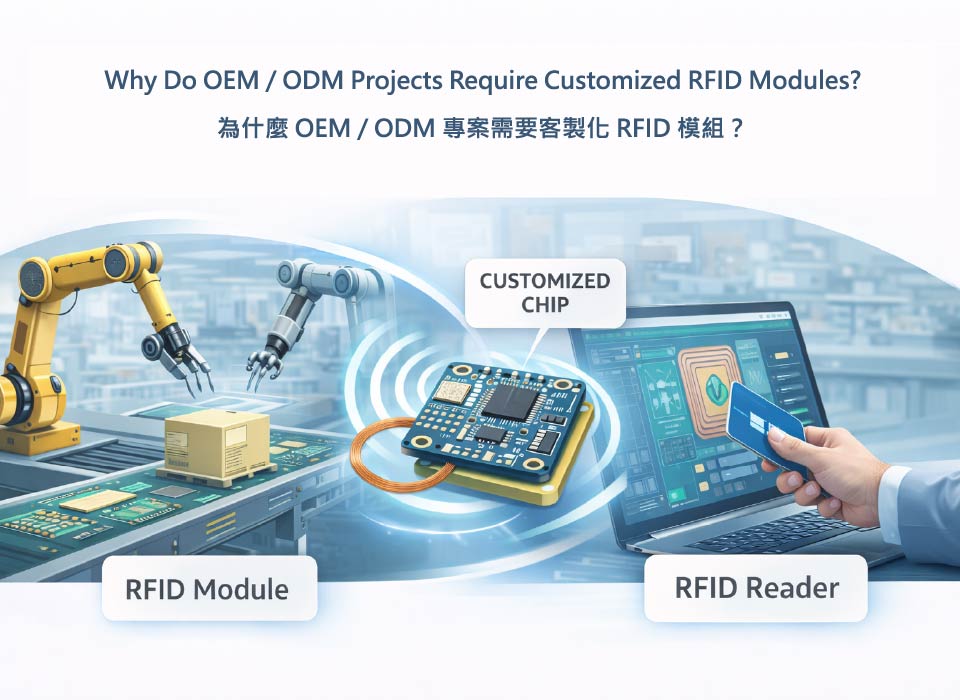
RFID spectrum selection defines the ultimate performance ceiling and structural reliability of an enterprise deployment. For high-volume OEM/ODM projects and multi-site enterprise rollouts, frequency engineering must take absolute priority during the initial architectural design phase, well before individual components are procured.
Aligning your deployment with regional regulatory boundaries, substrate profiles, and systemic data throughput needs ensures an uncompromised, future-proof tracking ecosystem. PONGEE provides field-proven RFID readers and controllers across diverse frequency specifications, backed by 42 years of technical manufacturing expertise to streamline your hardware integration pipeline.