
RFID Medical Supply Cabinet Management | Enhancing Automated Inventory & Expiry Tracking
In modern healthcare environments, medical supplies are highly diverse, fast-consuming, and require strict batch and expiry date management. Items such as catheters, diagnostic reagents, and single-use surgical materials demand accurate tracking. However, many facilities still rely on manual counting, leading to operational inefficiencies and clinical risks.
A healthcare system integrator seeking to scale smart cabinet solutions across large hospital networks faced challenges in hardware complexity and long-term maintenance costs. This case study explores how Pongee's RFID architecture balances performance and stability for large-scale medical deployment.
Key Industry Pain Points
- Manual Inventory Errors: Manual counting by nursing staff often leads to data inconsistencies and omissions during high-pressure clinical shifts.
- Lack of Real-Time Traceability: Difficulty in tracking who accessed which item and when, creating gaps in supply chain accountability.
- Batch and Expiry Risks: Without automated alerts, expired items may remain in stock, leading to clinical risks and financial waste.
- Dense Storage Interference: Medical supplies are often densely packed in metal cabinets, which can significantly impact RFID reading accuracy.
- Scaling Costs for Large Networks: High hardware complexity can make mass production and long-term maintenance burdensome for healthcare systems.

The Pongee RFID Solution: Healthcare Workflow Automation
Smart supply cabinets utilize UHF RFID as the core technology, supported by multi-antenna layouts to achieve precise, real-time inventory control without manual intervention.
-
RFID Tagging: Digitalizing Asset Data
Every medical item is tagged with a UHF RFID label, binding critical data such as item name, batch number, quantity, and expiry date. This creates a foundation for complete traceability.
-
Multi-Antenna Coverage for High Accuracy
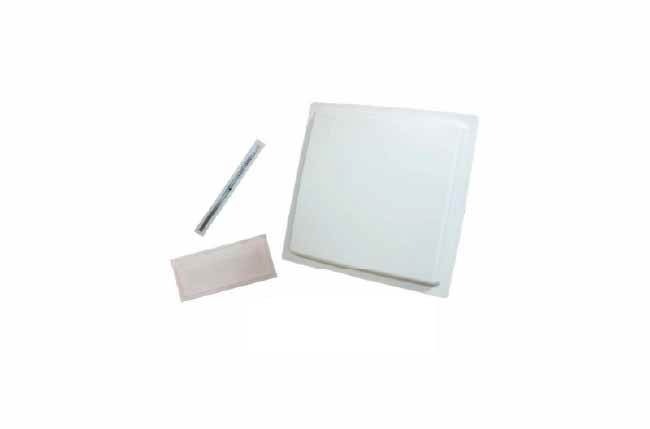
Multiple antennas are strategically installed—including shelf-mounted and side-coverage designs—controlled by an antenna switching module. This maximizes read rates even in dense storage environments.
-
Automated Audits via Door Sensors
Every door action triggers an automated audit. The system instantly detects new items, removals, or relocations, eliminating the need for manual data entry.
- Seamless HIS/ERP Integration
Audit results automatically sync with Hospital Information Systems (HIS) or ERP platforms, providing replenishment suggestions and expiry alerts in real-time.
- Cost-Effective Scalable Architecture
Pongee emphasizes hardware stability and deployment consistency, ensuring healthcare institutions can upgrade to smart management at a scalable cost.

Extended Value & ROI
- Inventory Visibility: Real-time tracking reduces stock-out risks and optimizes supply chain efficiency.
- Automated Expiry Management: Proactive alerts minimize clinical waste and ensure patient safety.
- Regulatory Compliance: Every supply movement is recorded, supporting audit trails and healthcare standards.
- Clinical Versatility: The same RFID architecture is applicable to OR, ER, and laboratory environments for high-value reagent tracking.
Global Healthcare Trends
- North America & Europe: Rapid adoption of RFID-enabled automated dispensing cabinets (ADC) to manage high-value surgical kits.
- Asia-Pacific: Increasing implementation in Japan and South Korea to address rising clinical workloads and aging populations.
- Market Growth: The global medical RFID market is projected to grow significantly, with smart cabinets being a primary driver for clinical point-of-care automation.
Frequently Asked Questions (FAQ)
Q1: Can existing hospital cabinets be retrofitted with RFID?
A: Yes. Pongee provides RFID antennas and readers that can be integrated into existing cabinet structures to upgrade them into smart systems.
Q2: Does RFID increase the workload for medical staff?
A: On the contrary, automated audits eliminate manual counting and documentation, allowing nurses to focus more on patient care.
Q3: How does the system handle dense metal interference?
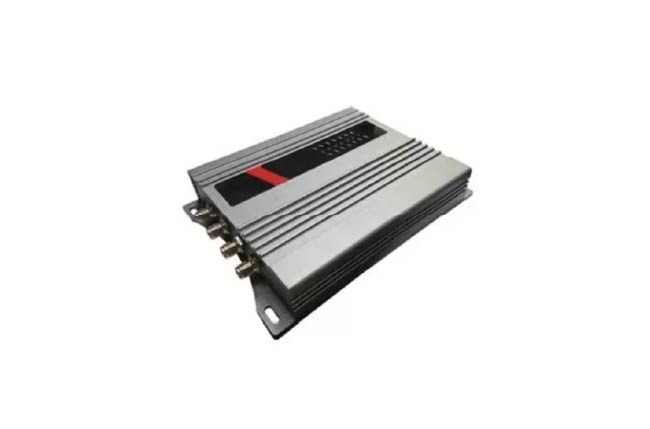
A: Through specialized antenna placement and Pongee's professional reader configuration, we maintain high read accuracy even in dense metal environments.
Q4: Does the hardware support standard communication protocols?
A: Yes. Pongee's RFID hardware supports multiple communication interfaces, ensuring flexible integration with HIS, ERP, and third-party platforms.
Partnership & OEM/ODM Inquiry
📚 Attention System Integrators: If you are seeking robust RFID modules for healthcare applications, Pongee is your trusted partner. We provide high-performance UHF readers, technical integration support, and scalable solutions for modern medical environments.