
RFID Medical Supply Cabinet Hardware Architecture: Optimizing Automated Dispensing & Perpetual Inventory Audits
In modern high-acuity healthcare environments, medical supplies are highly diversified, velocity-driven, and mandate uncompromising batch-control and expiration management. Critical assets such as cardiovascular catheters, diagnostic reagents, and single-use surgical kits require absolute point-of-care traceability. However, many medical facilities still suffer from legacy manual counting workflows, escalating clinical risks and operational inefficiencies.
For healthcare system integrators engineering scalable Automated Dispensing Cabinets (ADC) across multi-site hospital networks, hardware complexity and long-term total cost of ownership (TCO) remain significant barriers. This technical case study examines how PONGEE’s industrial-grade RFID hardware architecture balances high-throughput interrogation performance with long-term deployment stability for large-scale enterprise medical networks.
Critical Healthcare Supply Chain Vulnerabilities
- Manual Inventory Errors & Shrinkage: Legacy manual tracking by clinical nursing staff leads to severe data discrepancies and documentation omissions during high-pressure emergency shifts.
- Deficient Real-Time Chain of Custody: Absence of automated user logs creates visibility gaps regarding asset withdrawal accountability, compromising compliance metrics.
- Perishable Expiration Liabilities: Without real-time, automated threshold alerts, expired medical supplies remain undetected in stock, elevating clinical liabilities and financial waste.
- Multipath Interference & RF Attenuation: High-value medical devices are frequently stored in dense metallic enclosures, causing severe RF detuning and signal reflection that compromise standard reader accuracy.
- Prohibitive TCO for Enterprise Scaling: High component complexity and fragile hardware engineering make mass deployment and long-term lifecycle maintenance cost-prohibitive for large hospital networks.

The PONGEE Hardware Solution: Point-of-Care Workflow Automation
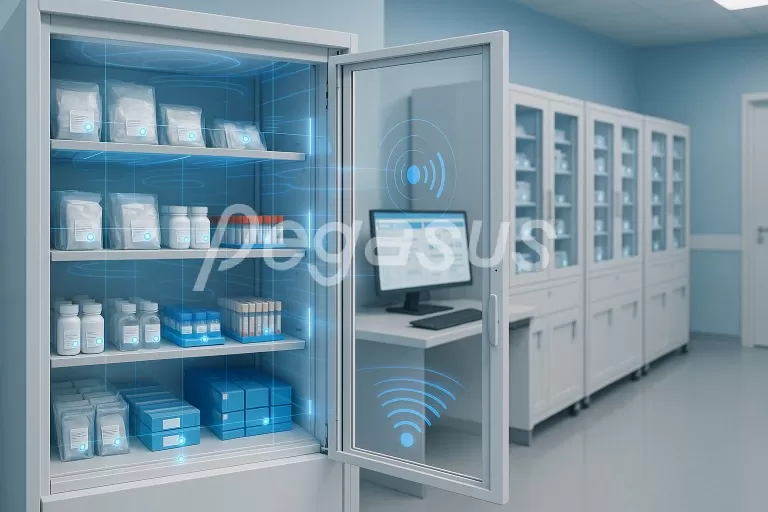
To eliminate manual intervention, PONGEE’s smart supply cabinet reference design leverages high-performance UHF RFID far-field technology paired with multiplexed multi-antenna configurations to deliver deterministic, real-time perpetual inventory control.
Item-Level RFID Serialization & Asset Digitalization
Each specialized medical asset is equipped with a high-performance UHF RFID tag, embedding immutable data parameters including unique device identifiers (UDI), batch numbers, asset volume, and expiration metrics to establish an uncompromised chain of custody.
Multiplexed Multi-Antenna Arrays for High Interrogation Density
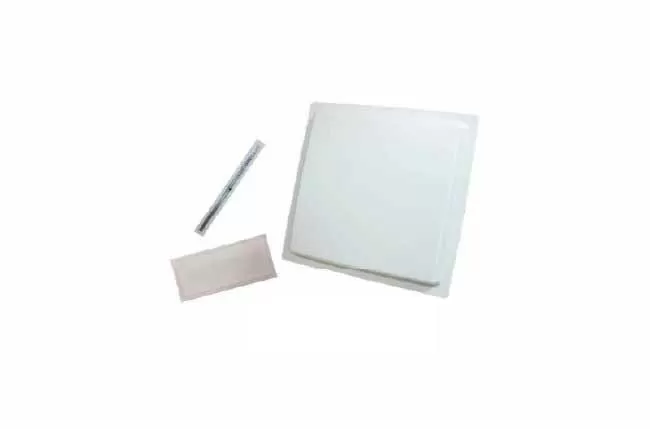
By strategically integrating shelf-embedded near-field antennas with side-mounted far-field coverage controlled by an intelligent antenna switching module, PONGEE maximizes read-rate throughput, completely mitigating shadow zones caused by dense metallic packaging and liquid reagents.
Instantaneous Perpetual Audits via Smart Sensor Interlocks
Every cabinet door cycle triggers an automated hardware-level inventory audit. The system instantly decodes and logs stock entry, removal, or relocation event-data within seconds, removing manual ledger updates from the clinical workflow entirely.
Seamless Native Integration with HIS & ERP Infrastructure
Edge data streams automatically bridge with centralized Hospital Information Systems (HIS) and enterprise ERP backbones via standard communication APIs, facilitating automated replenishment workflows, dynamic stock leveling, and instant safety alerts.
Cost-Effective, Highly Scalable Hardware Architecture
PONGEE prioritizes component-level modularity and robust manufacturing consistency, enabling medical equipment manufacturers and system integrators to scale smart cabinet rollouts while optimizing deployment costs and operational TCO.
Measurable Enterprise ROI & Value Proposition
- Granular Inventory Visibility: Continuous data capture mitigates stock-out risks of life-saving equipment and optimizes hospital supply chain velocity.
- Proactive Automated Risk Mitigation: System-generated expiration alerts eliminate clinical waste, guarantee patient point-of-care safety, and simplify regulatory audits.
- Rigorous Regulatory Audit Trails: Every component movement is permanently timestamped and matched to user credentials, facilitating total compliance with strict global healthcare standards.
- Cross-Department Versatility: The underlying UHF hardware topology scales seamlessly from Operating Rooms (OR) and Emergency Departments (ED) to laboratory environments for high-value chemical reagent tracking.
Global Healthcare Automation Trends
- North America & Europe: Rapid legislative and institutional enforcement of RFID-enabled Automated Dispensing Cabinets (ADC) to secure and audit high-value surgical implants.
- Asia-Pacific Network Growth: Accelerated adoption across Japan, South Korea, and Taiwan to counteract expanding clinical nursing workloads and shifting demographic pressures.
- Market Scaling: The global medical RFID hardware ecosystem is experiencing significant growth, with intelligent containment units serving as the primary driver for clinical point-of-care modernization.
Frequently Asked Questions (FAQ)
Q1: Can legacy hospital cabinet structures be retrofitted with RFID hardware?
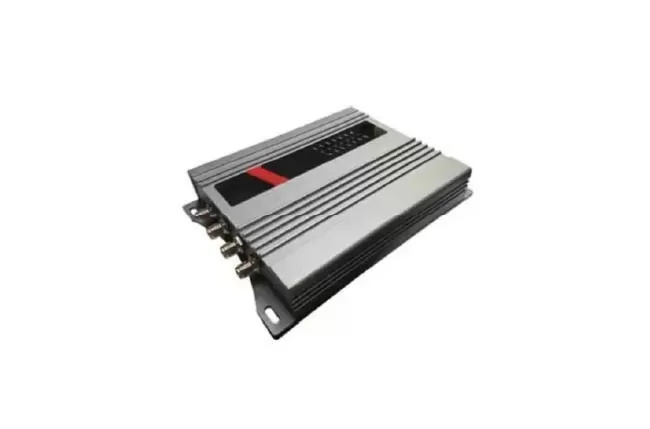
A: Yes. PONGEE engineers modular UHF RFID readers and customizable antenna components designed for seamless integration into existing hospital cabinet retrofits, converting legacy physical storage into smart, networked data points.
Q2: Does the deployment of RFID hardware add to the clinical workload of nursing staff?
A: On the contrary. By conducting automated passive audits upon door closure, the hardware completely eliminates manual logging and stock-counting overhead, returning valuable time to direct patient care.
Q3: How does PONGEE circumvent severe RF signal interference in high-density metal cabinet environments?
A: Through specialized antenna impedance tuning, multiplexed beam steering, and expert reader power-level configuration, our hardware maintains exceptional read accuracy and penetration even within highly reflective metallic environments.
Q4: Does the hardware natively support standard enterprise communication protocols?
A: Yes. PONGEE’s RFID hardware infrastructure supports comprehensive industrial communication interfaces, ensuring seamless data parsing and reliable integration into HIS, ERP, and bespoke third-party hospital middleware software.
Partnership & OEM/ODM Inquiry
📚 Attention System Integrators: If you are seeking robust RFID modules for healthcare applications, PONGEE is your trusted partner. We provide high-performance UHF readers, technical integration support, and scalable solutions for modern medical environments.