
Why OEM / ODM Projects Demand Customized RFID Modules: A Strategic Analysis
In the competitive landscape of industrial IoT and system integration, RFID is rarely a "plug-and-play" component. For original equipment manufacturers (OEMs), relying on generic, off-the-shelf modules can lead to unexpected technical bottlenecks during mass production. This article explores why customized RFID modules are the cornerstone of successful industrial product development.
The Pitfalls of Using Standard RFID Modules in Mass Production
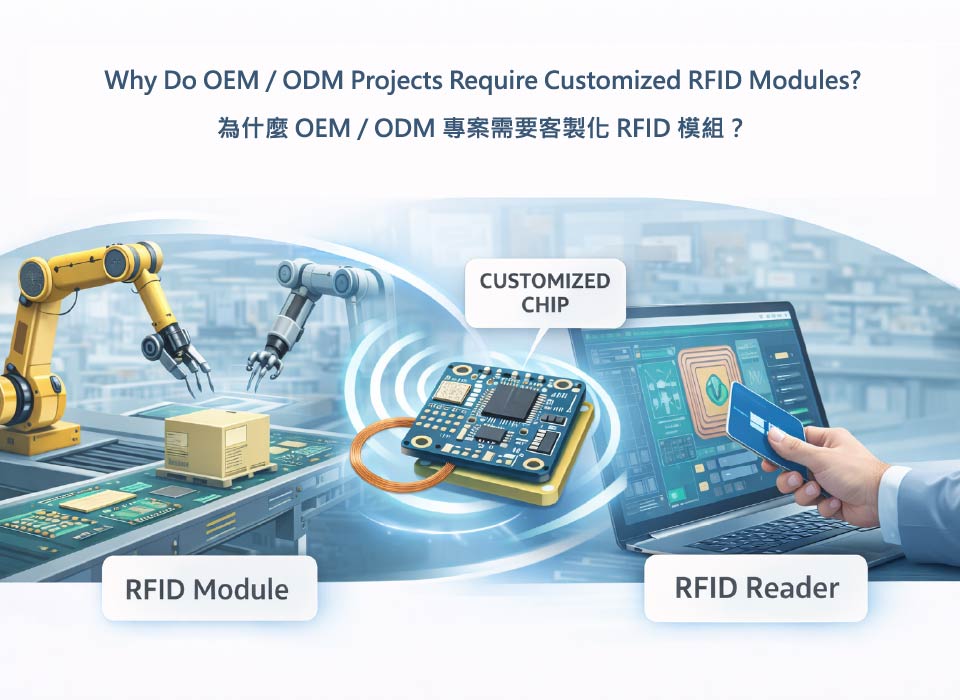
Most commercial-grade RFID modules are designed for rapid prototyping or low-volume consumer applications. When transitioned into high-stakes OEM/ODM environments, standard modules frequently encounter:
- Unstable RF Performance: Poor read rates when integrated into metal housing or noise-heavy environments.
- EMI / EMC Compliance Failures: Difficulty meeting strict international certification standards (CE/FCC).
- BOM Instability: Unexpected component changes that force costly firmware or hardware redesigns.
- Feature Redundancy: Overpaying for unused interfaces or frequency bands that complicate system validation.
Three Strategic Pillars of RFID Customization
1. Lifecycle Stability and BOM Control
Industrial projects often require a 5 to 10-year supply commitment. Pongee ensures long-term availability through:
- Fixed BOM Configurations: No unannounced hardware revisions.
- Firmware Version Locking: Ensuring software compatibility throughout the entire product lifecycle.
- Controlled PCN (Product Change Notification) Processes: Professional management of inevitable component transitions.
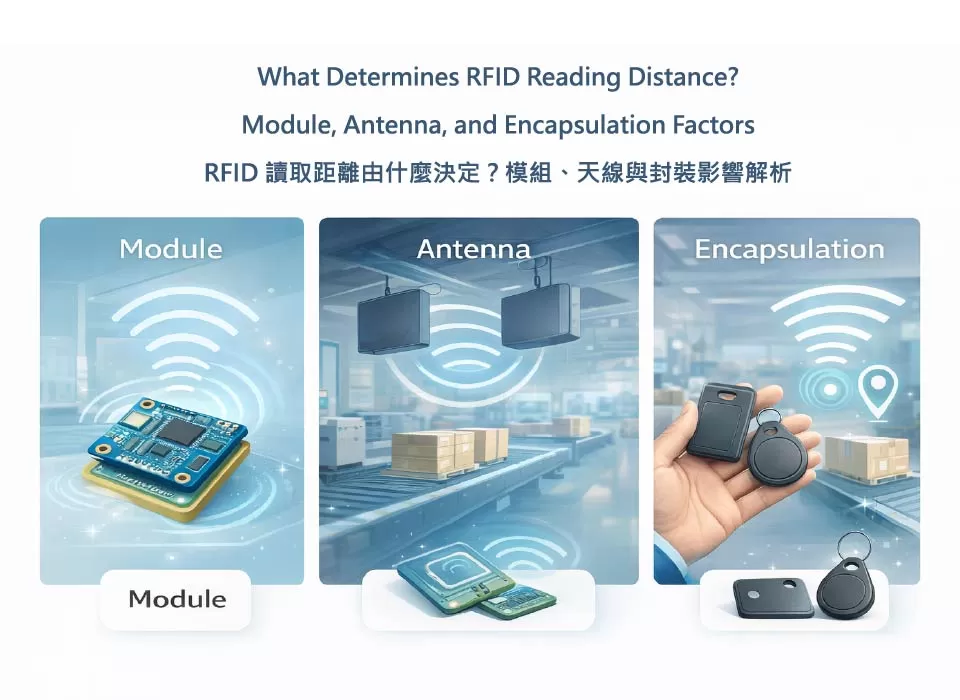
2. Advanced Antenna and Mechanical Engineering
Over 80% of field failures in RFID systems stem from antenna detuning caused by environmental factors. Standard antennas cannot overcome the challenges of:
- Dense metal enclosures or liquid-filled environments.
- Strictly limited installation footprints in handheld or medical devices.
- Specific polarization requirements for multi-tag reading.
Pongee’s customization services optimize antenna geometry and impedance matching circuits directly at the system level to ensure maximum read range and reliability.
3. Optimized Firmware and Interface Protocol
Customized firmware allows your RFID module to speak your system’s language fluently. We provide tailor-made logic for:
- Specific Data Parsing: Pre-processing card data (UID, sector, or encrypted blocks) to reduce host CPU load.
- Proprietary Protocols: Seamlessly matching your existing system middleware or encryption requirements.
- Secure Authentication: Implementing custom DESFire, MIFARE, or proprietary security keys at the module level.
The Business Value: Reducing "Time-to-Market" Risks
Investing in a customized RFID module is a risk mitigation strategy. By addressing RF challenges and integration hurdles during the design phase, OEMs can avoid:
- Late-stage hardware redesigns that delay product launches.
- High maintenance costs caused by inconsistent field performance.
- Supply chain disruptions due to EOL (End-of-Life) components.
Conclusion: Moving Beyond "Module Selection" to "System Design"
Successful OEM / ODM projects view the RFID module as an integral part of the system architecture, not an isolated peripheral. Customization is not merely an added cost; it is a strategic investment that ensures scalability, brand reputation, and long-term technical superiority.
Partner with Pongee for your next OEM challenge. Our engineering team specializes in turning complex RFID requirements into seamless, integrated hardware solutions.