
RFID EM Module Final Functional Verification After Potting | 100% Inspection for ODM Applications
Why Final Functional Verification Is Required for RFID EM Modules
In embedded RFID applications, a final-stage 100% functional verification is required after potting and full curing to ensure that the encapsulation process has not affected antenna characteristics, detection performance, or electrical stability.
This final verification serves as a critical quality gate before shipment, ensuring consistent and reliable performance in real-world applications.
Position of Final Verification in the Manufacturing Process
The final verification shown in this video is performed after the following steps are completed:
- Antenna soldering and electrical connection
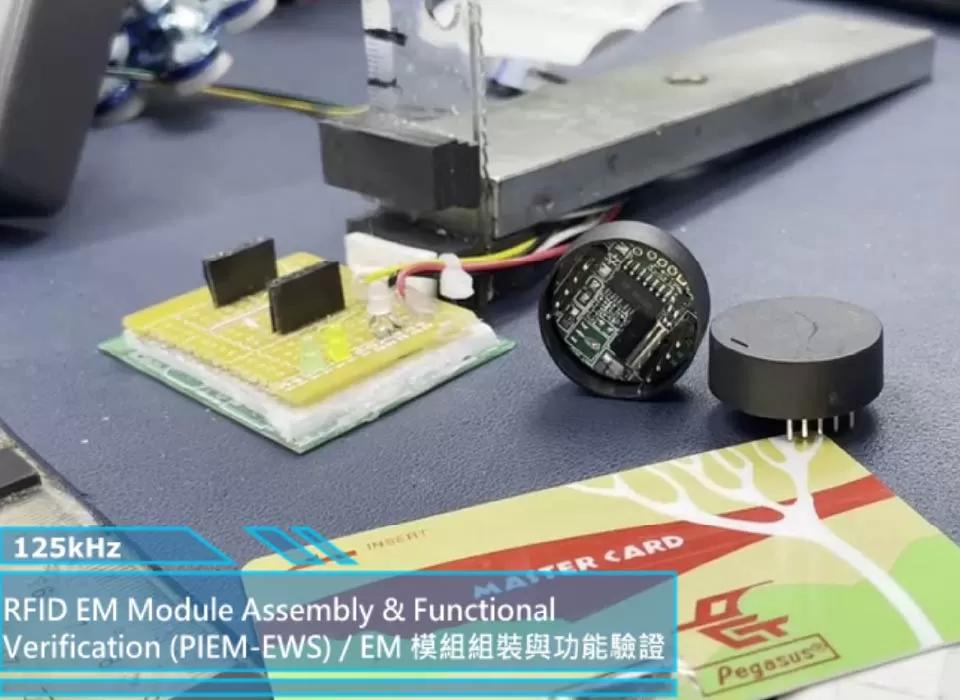
- Two-stage functional verification (bare module and after housing assembly)
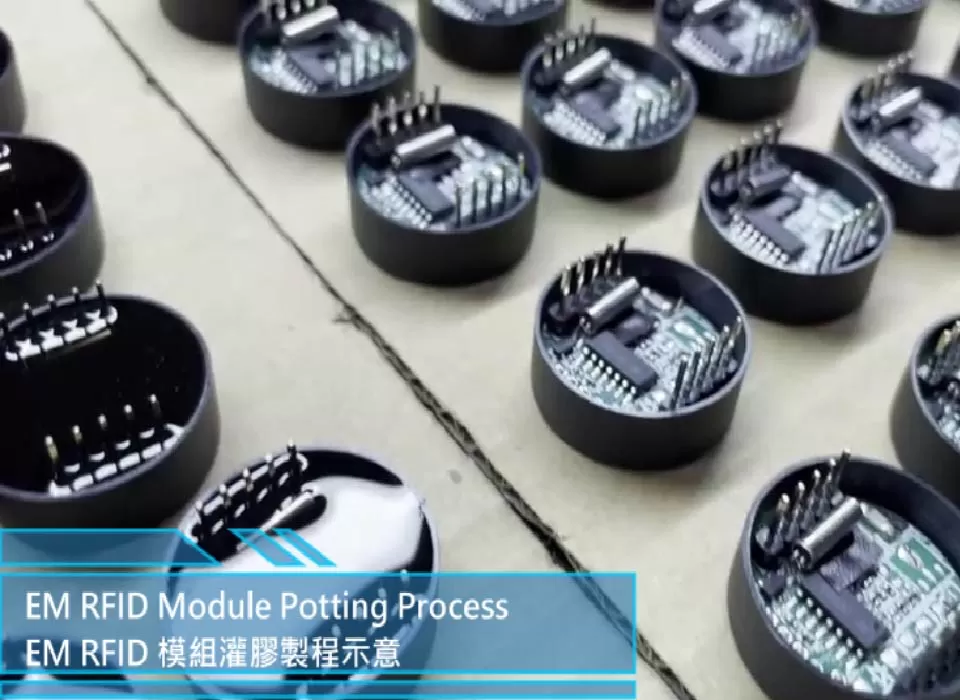
- Potting and full curing of the module
Verifying the module at this stage ensures functional integrity under its final encapsulated condition before packaging.
Final 100% Functional Verification Items
Each RFID EM module undergoes individual verification, including:
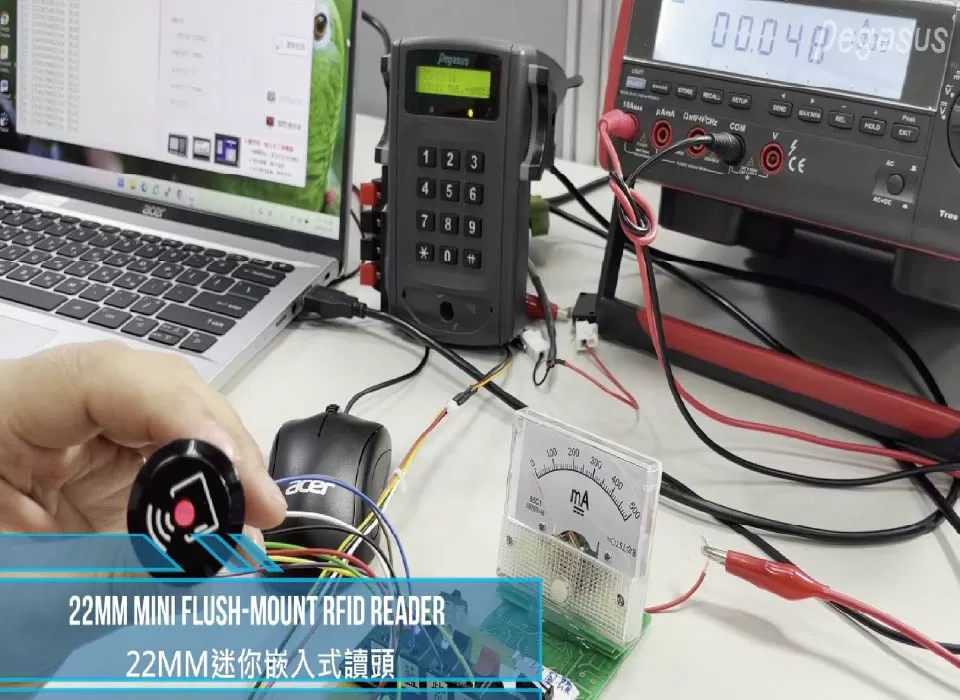
- EM card reading test to confirm stable detection under normal operating conditions
- Glass tag reading test to validate reliable detection for compact and embedded application scenarios
Why Verification Is Required After Potting
While potting enhances environmental protection and mechanical stability, it may also influence:
- Antenna impedance and detection behavior
- Long-term operational stability
- Consistency across different application environments
Therefore, final verification after curing is an essential step to ensure product quality and reliability.
QC Labeling and Packaging Process
Modules that pass the final verification will:
- Receive a QC label for quality identification
- Be placed into dedicated trays by batch
- Proceed to packaging and shipment
This ensures that every shipped module has completed the full manufacturing and verification process.
OEM / ODM Application Value
By implementing a structured workflow of assembly, multi-stage verification, potting, final verification, and shipment, OEM/ODM
projects benefit from improved production consistency, reduced failure risk, and long-term reliability for embedded RFID modules
used in medical and industrial applications.